
Integrated Sensing and Communication(ISAC)
Published in South China University of Technology, School of Electronics and Information Engineering, 2024
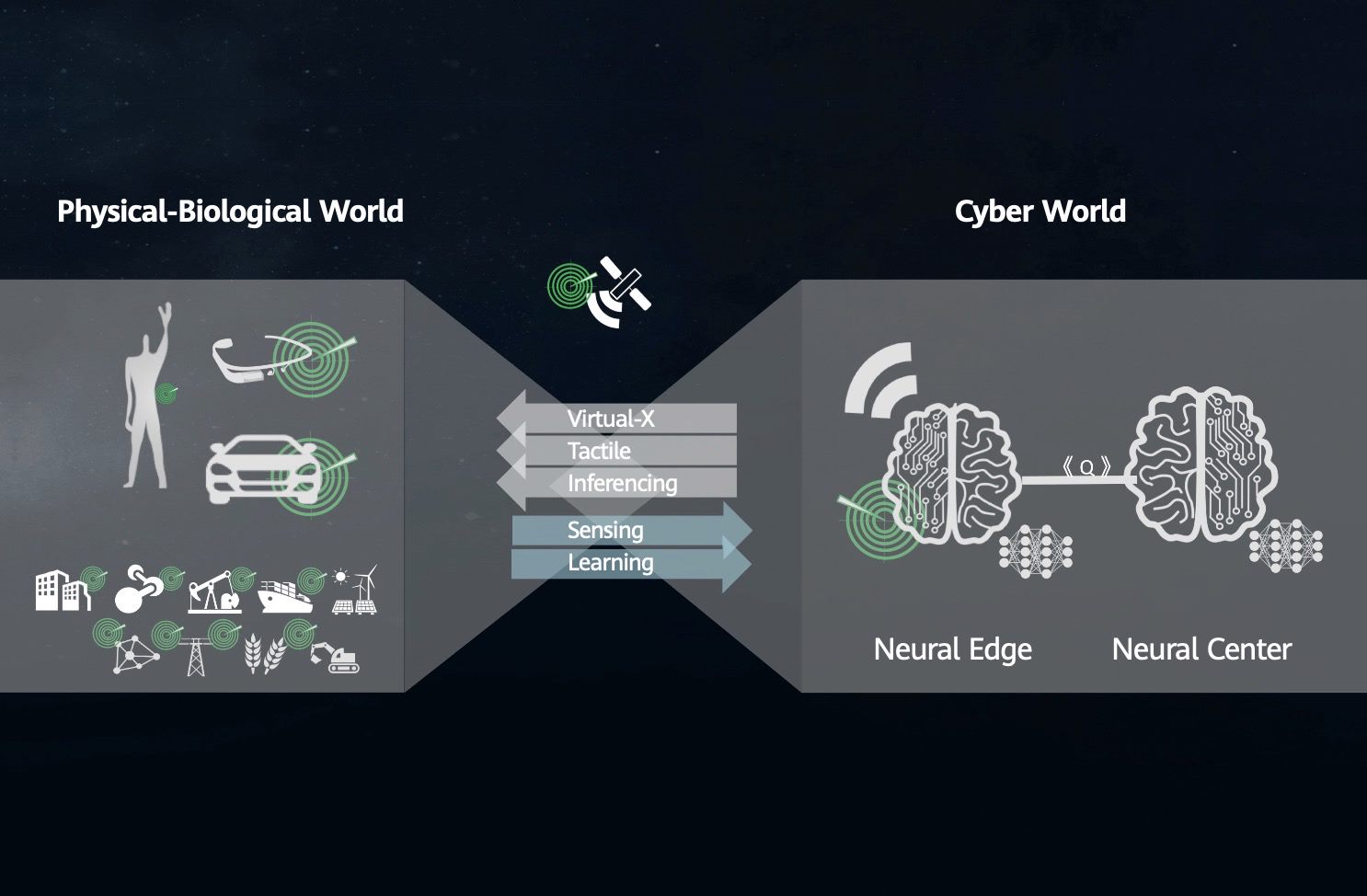
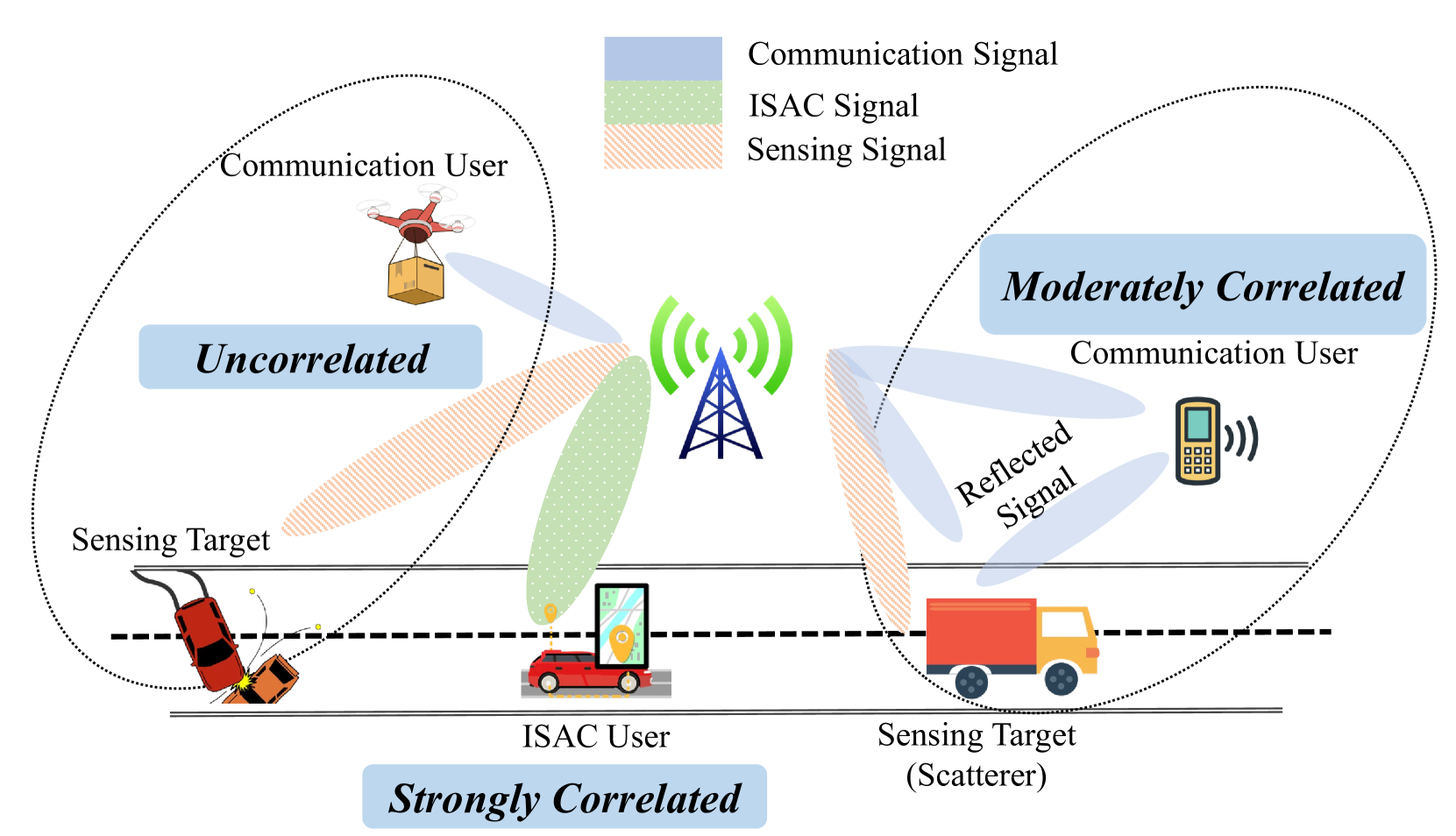
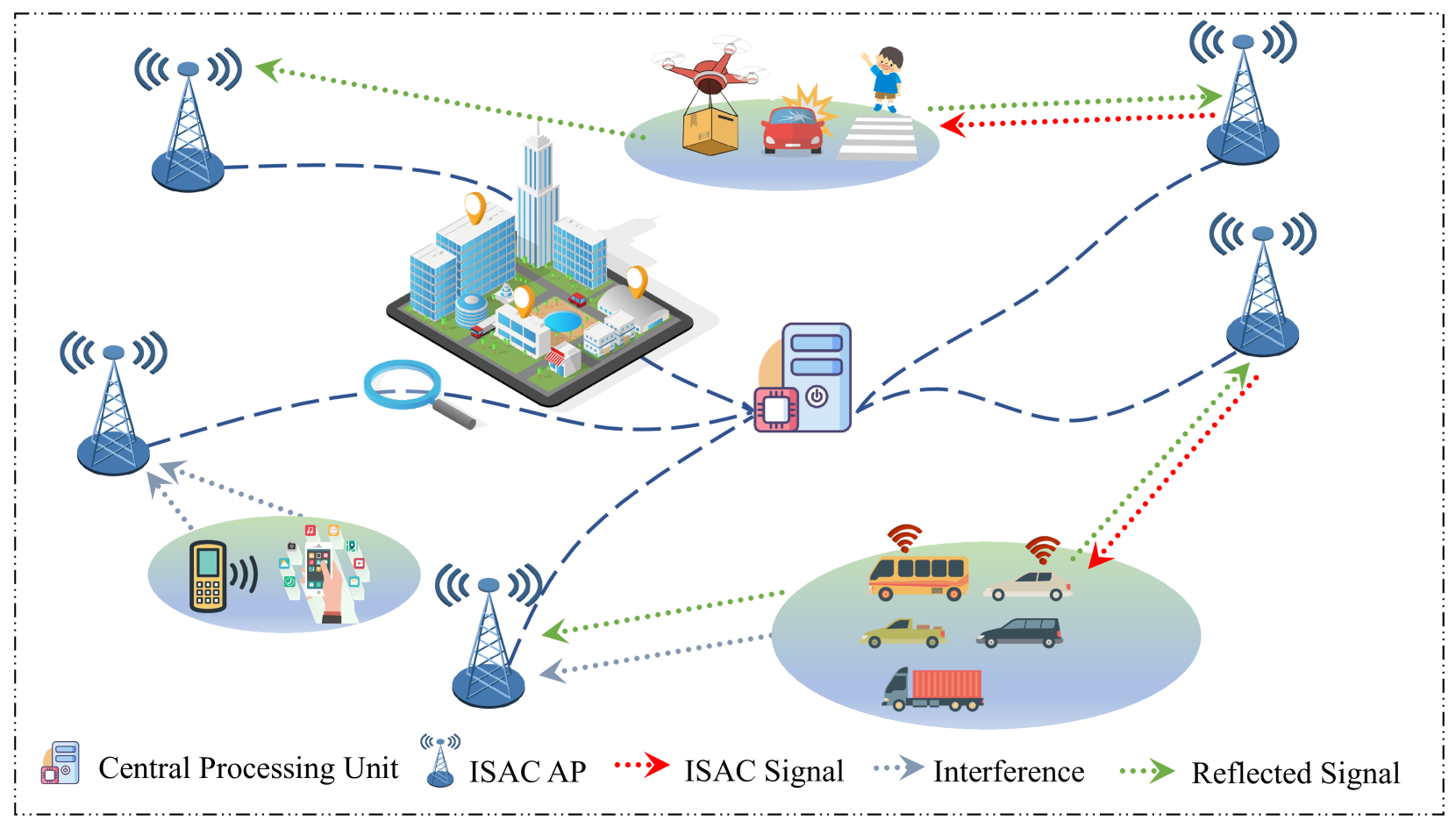
I am currently pursuing my PhD at the School of Electronics and Information Engineering, South China University of Technology. My research focuses on Integrated Sensing and Communication (ISAC), a cutting-edge area that combines sensing and communication functionalities into a unified system. This interdisciplinary approach aims to enhance the efficiency and performance of wireless networks by leveraging advanced signal processing techniques and deep learning algorithms.
Aligned with the vision for 6G networks and the International Telecommunication Union’s (ITU) 2030 motto of “Connecting the Unconnected,” my work involves developing innovative models and algorithms to improve the accuracy and reliability of ISAC systems. These advancements have potential applications in IoT networks, autonomous vehicles, and smart cities. By integrating sensing and communication, my research seeks to address key challenges in modern wireless communication, such as spectrum efficiency, interference management, and real-time data processing.
High-accuracy localization and tracking
The 6G network will enable both device-based and device-free high-accuracy localization and tracking, leveraging advanced sensing techniques and AI to provide centimeter-level precision. This technology will revolutionize various industries, from warehousing to smart homes, by allowing precise placement and movement of objects. Future ISAC systems will offer semantic localization with context awareness, enhancing applications like robotic waiters in restaurants and automated factories, ensuring efficient and accurate operations.
Simultaneous imaging, mapping and localization
Simultaneous imaging, mapping, and localization in 6G networks mutually enhance each other, leveraging advanced algorithms, edge computing, and AI to produce super-resolution images and maps. This enables applications like scene reconstruction, spatial localization, and navigation for indoor scenarios, and helps provide up-to-date environmental knowledge. In outdoor scenarios, mobile vehicles can achieve higher autonomy by using maps reconstructed by base stations, improving sensing resolution and accuracy. This technology supports smart traffic control in urban areas, forming a dynamic virtual city for applications like traffic flow monitoring and accident detection.
Augmented human sensing
Augmented human sensing, enabled by 6G networks, aims to provide high-precision, low-power sensing and imaging capabilities that exceed human abilities through portable devices like 6G-enabled phones, wearables, or implanted medical equipment. This technology will facilitate applications such as remote surgery, cancer diagnostics, and intelligent factory operations with ultra-high-precision detection and tracking. 6G’s high THz frequency allows for NLOS imaging, enabling devices to detect hidden objects and perform security scans. Additionally, spectrogram recognition can identify materials and food types, enhancing pollution management and food safety.
Gesture and activity recognition
Device-free gesture and posture recognition using machine learning in 6G networks will enable high-resolution and accurate capture of finer postures and gestures, enhancing human-computer interfaces. This technology, which does not compromise personal privacy, is ideal for smart homes and hospitals. In smart hospitals, it will enable automatic supervision of patients during physiotherapy, while in smart homes, it will allow remote control of appliances through hand gestures. Future applications include playing a virtual piano in the air, providing an immersive experience and opening up possibilities for innovative applications related to high-accuracy finger motion detection and tracking.